
DoNeutS:
A Double Neutron Star Catalogue

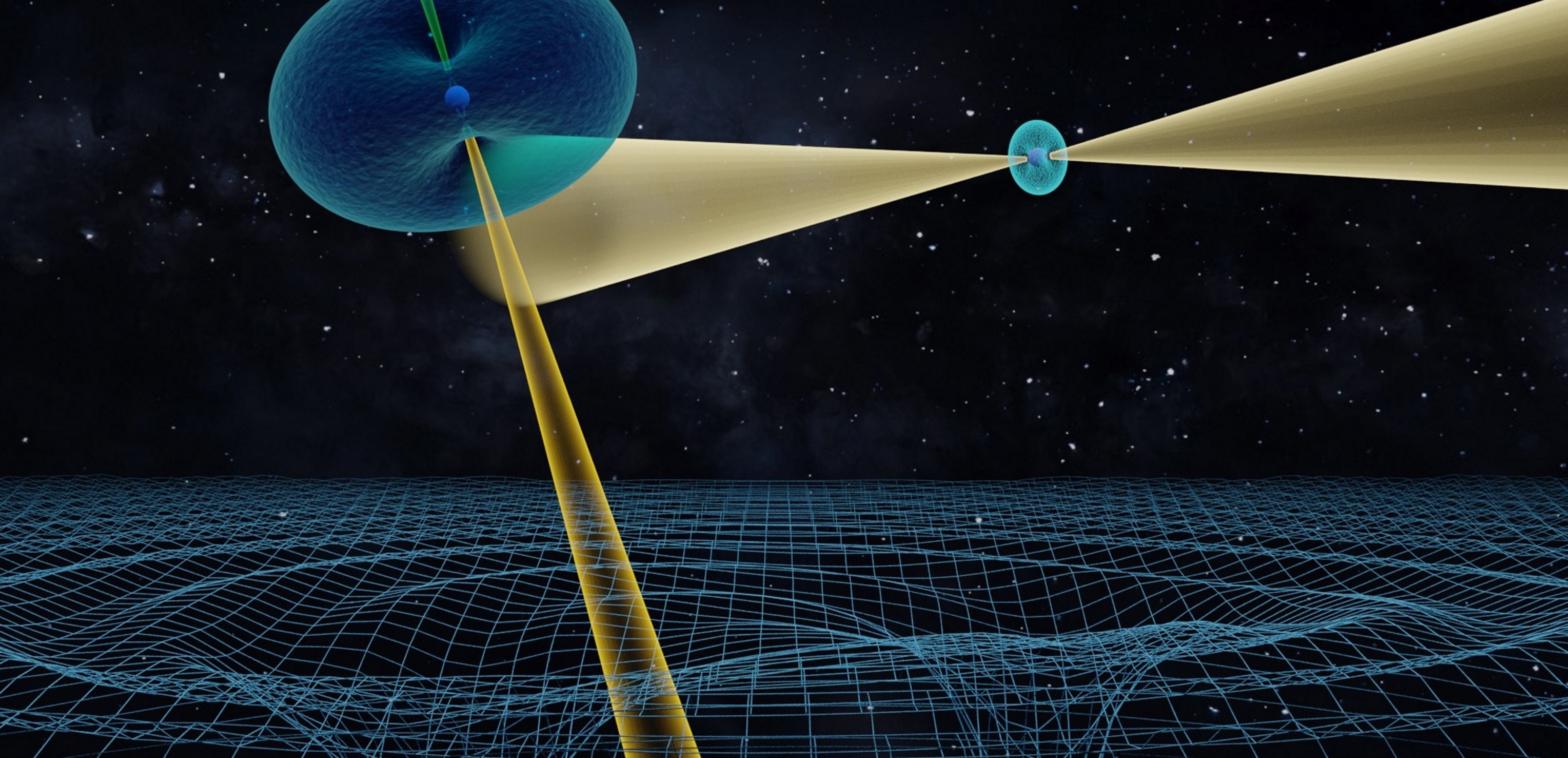
Neutron Stars (NS) are some of the most fascinating objects in the Universe. First observed as a pulsar in the radio band (Hewish et al., 1968 ), their existence was previously predicted as the final outcome of massive stars undergoing supernova collapse (Baade & Zwicky, 1934a;1934b ), later confirmed by the association of pulse emitters with supernova remnants. Recognized as rapidly rotating and highly magnetized compact objects, and described under the theory of General Relativity (GR), the increasing effort to understand their nature and formation process is providing new insights into many areas of modern astrophysics. From the ground state of ultra-dense matter - found inside these stellar corpses - to the interstellar medium enrichment with r-process elements such as gold and platinum - formed after a DNS merger, their study helps to uncover the mysteries of our Cosmos.
Although a significant portion of pulsars are found to be isolated, the majority of their properties can only be well constrained (until now) through observations in binary systems, where they orbit a companion star, due to the use of orbital motion laws. If the companion is another compact object, like a White Dwarf (WD) or a NS, i.e. a Double Neutron Star (DNS) system in the last case, the detection of pulses under the influence of GR enable us to set highly precise constraints on their properties. Furthermore, the recent detection made by LIGO/Virgo Collaboration of Gravitational Waves emitted from the merger of a DNS placed these systems in a privileged position to study NS physics, and marked the start of the multimessenger and multiwavelength astronomy era. This allows us to combine electromagnetic and gravitational information to set even better constraints on their properties, as well as compare the sample of Galactic NS's with those found at higher redshifts.
The aim of ©DoNeutS project is to facilitate access to reliable information and provide the scientific community with a living catalog with the latest discoveries of DNS systems. We hope that this initiative will help to advance and accelerate the develpment of Neutron Star physics.
If you found it useful do not forget to cite. If you have suggestions for the project or found any error, do not hesitate in contacting us.
Enjoy!
To download the complete dataset please click here.